How are density, ratio and mould layout managed in moulded visco (memory foam) pillows? A machine and process guide for pillow manufacturers.
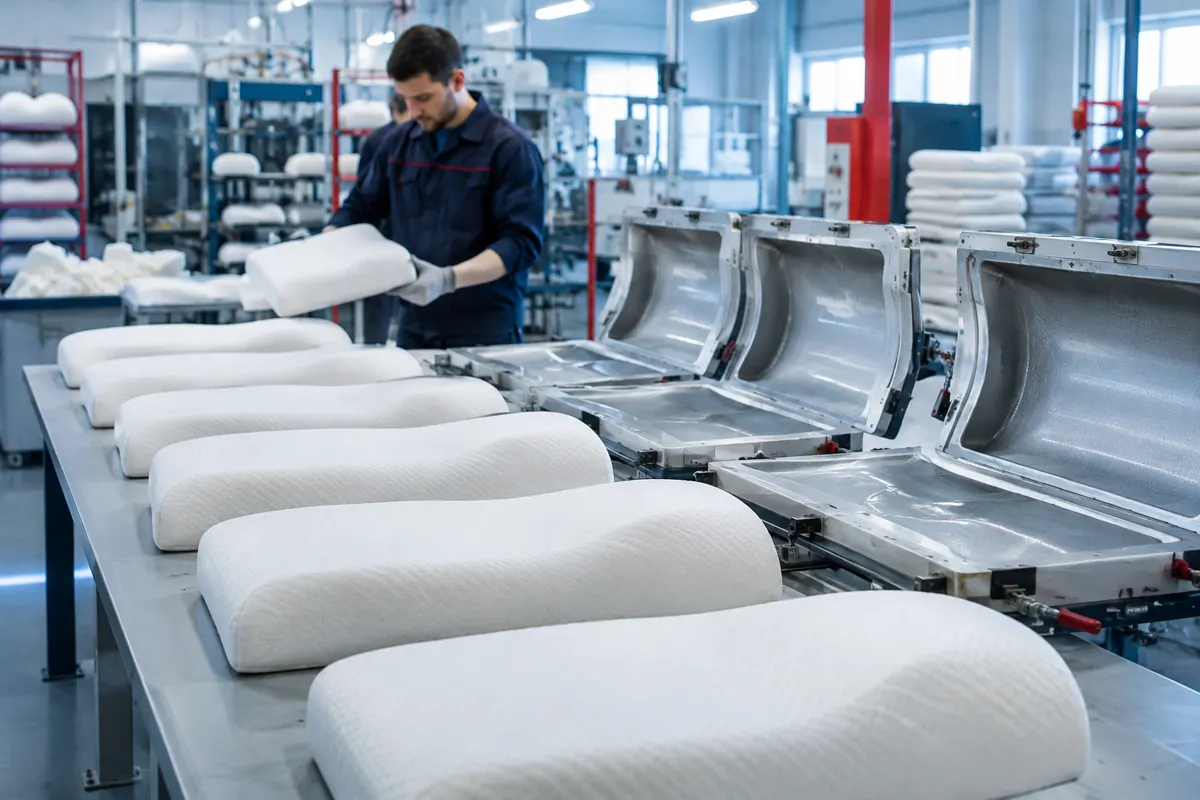
Visco (viscoelastic) foam, known as memory foam, is a polyurethane foam that slowly takes shape under pressure and slowly returns to its original form when the pressure is removed. Orthopaedic and neck pillows are made by moulding so that the shape is formed directly in the mould.
How does production work?
- The moulds are heated and release agent is applied.
- The machine pours the shot weight set in the recipe into the mould.
- The mould closes and the foam completes its reaction.
- The product is removed, crushed if needed to open the cell structure, and covered.
What defines quality
- Density and shot weight: The shot amount must be constant so every pillow feels the same.
- Ratio and temperature: Visco systems are temperature-sensitive; material and mould temperatures must be monitored.
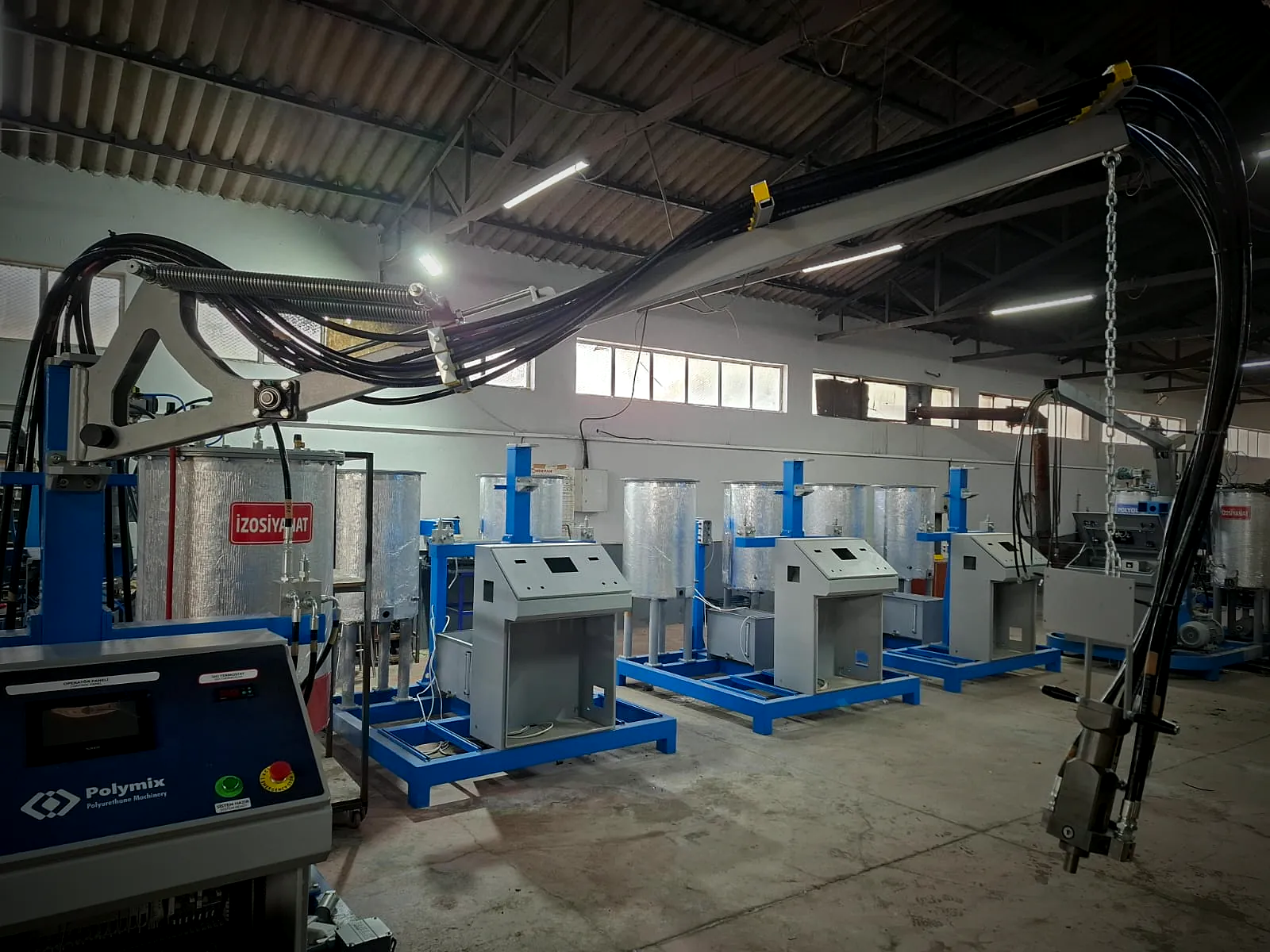
- Mould layout: To fill many moulds in rotation, a boom with wide reach and a fast cycle matter.
A pillow line with Polymix
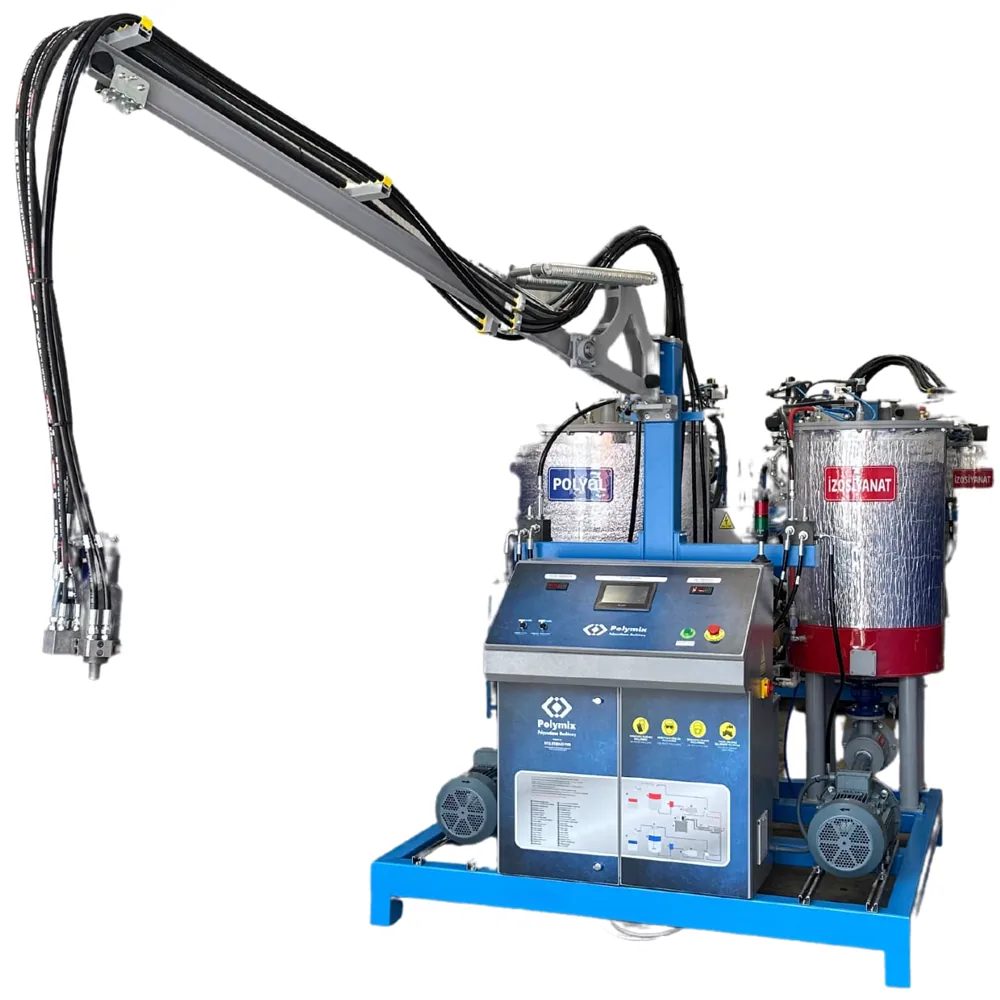
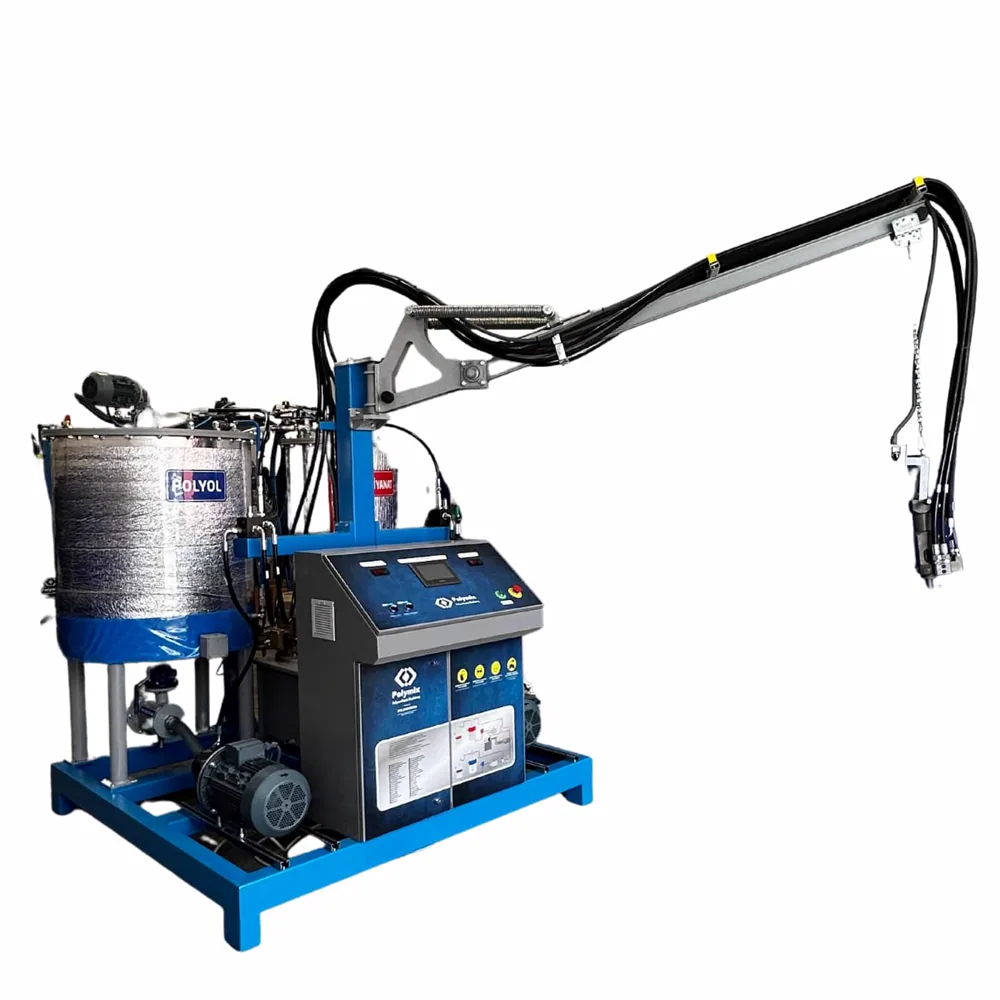
The roughly 300° boom movement on Polymix machines makes it easy to feed moulds arranged around the machine from a single point. The ratio is monitored in real time with a 0.003-precision flowmeter, and recipe memory allows fast changeovers between pillow models.
Frequently asked questions
Are visco pillows made from cut foam or moulded? Both are possible; for ergonomically shaped orthopaedic pillows, moulding gives accurate shapes and low scrap.
Can I produce visco with my current machine? Yes, if the chemical system’s ratio range and the machine’s capacity are suitable. Share your machine details and we will assess it together.