Integral skin foam forms its own skin. Why is it chosen for armrests, steering wheels and furniture parts, and what matters in production?
Integral skin polyurethane is a type of polyurethane that, in a single shot inside the mould, forms a dense and durable skin on the outside and a lighter foam core inside. The result is a part with a ready-to-use surface that needs no separate coating or sewing.
Where is it used?
- Armrests for office and salon chairs
- Steering wheels, gear knobs and vehicle interior trim
- Bicycle and motorcycle saddles
- Handles for furniture and medical equipment
How does the skin form?
When the mix touches the cool mould surface, gas formation near the surface is suppressed and a dense outer layer forms. The inside foams to create the light core. Skin quality is determined by mould temperature, release agent application, mixing quality and the correct fill amount.
What matters on the machine?
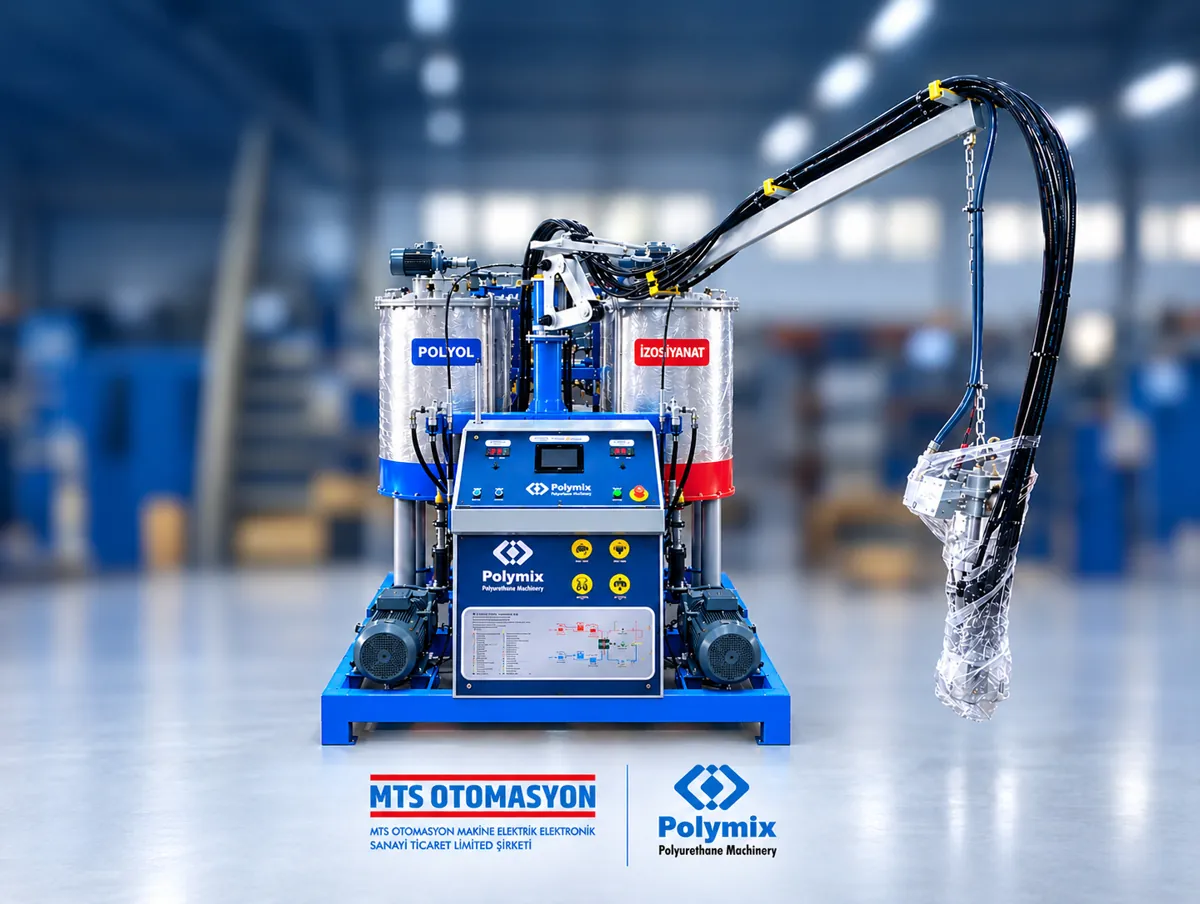
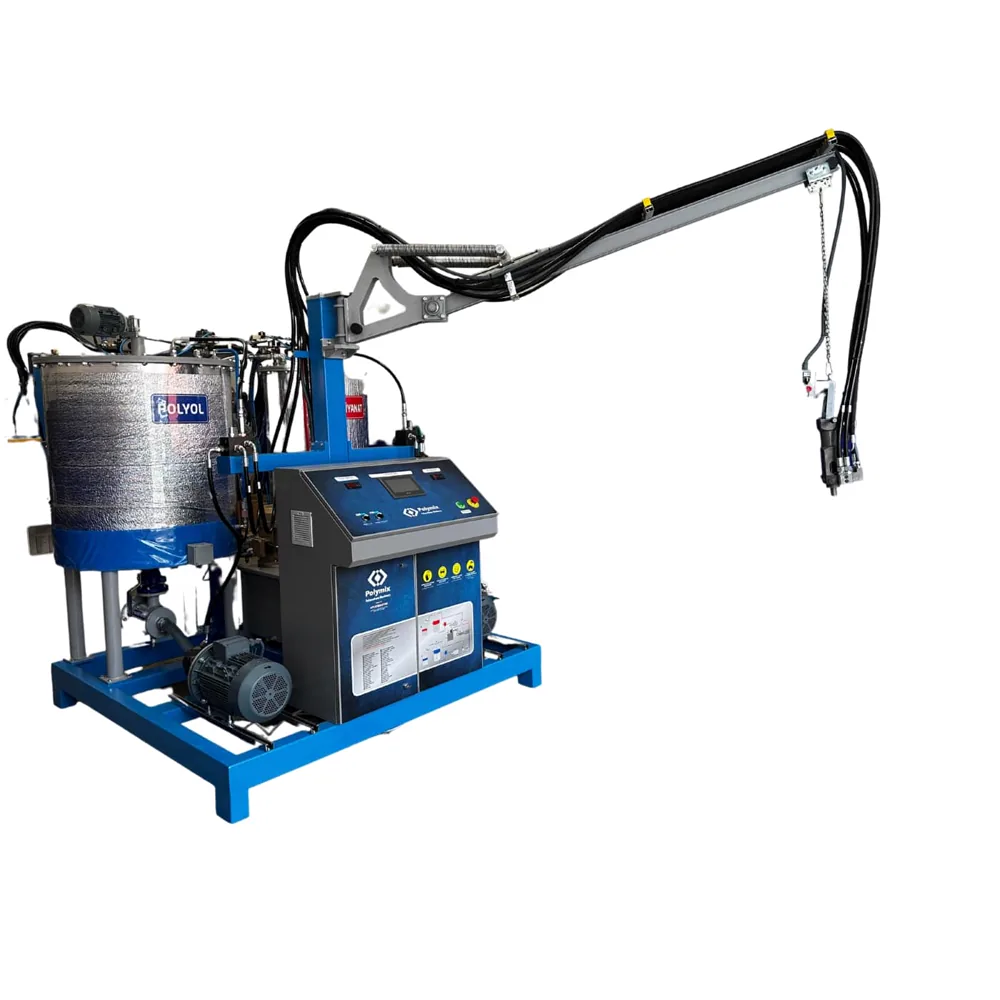
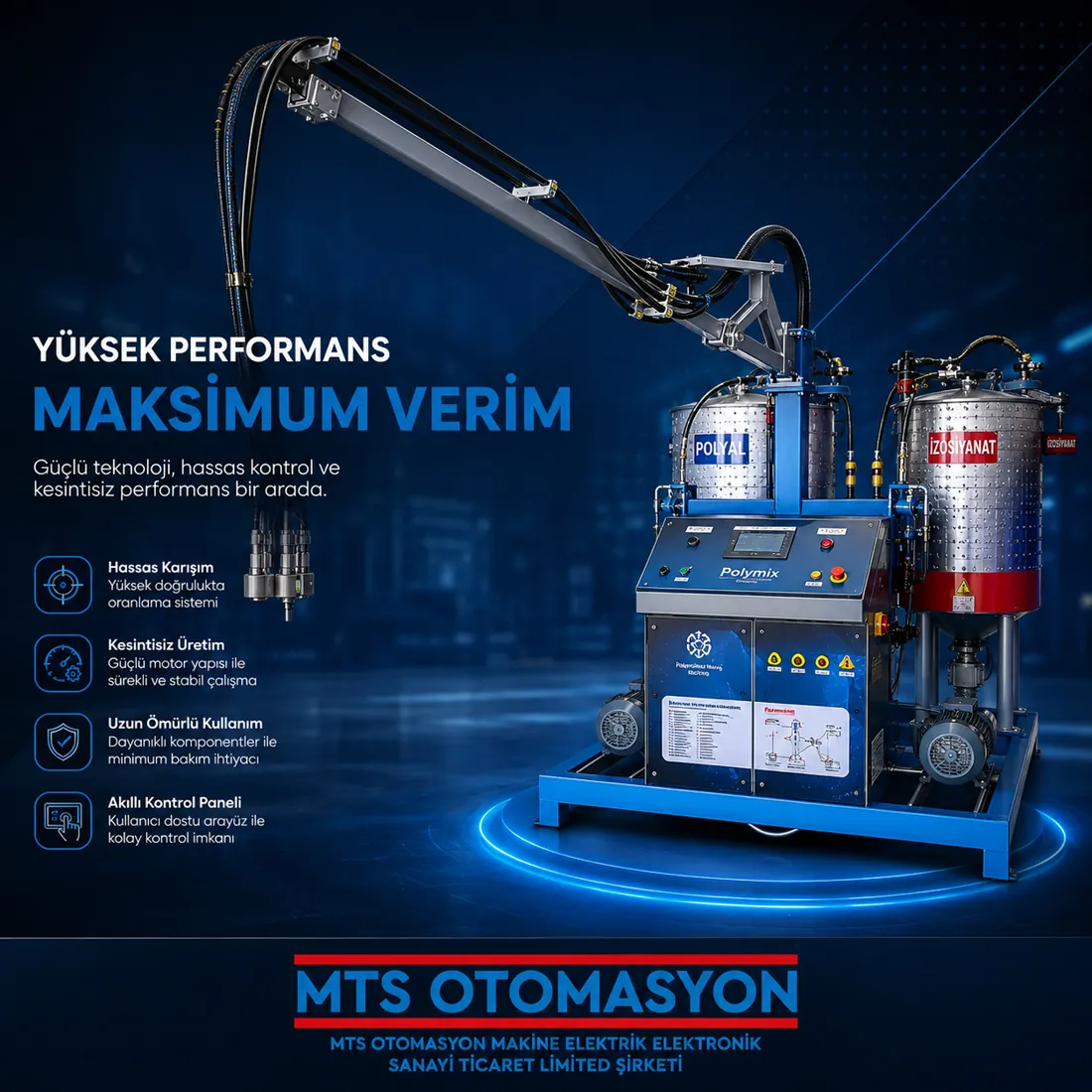
- Homogeneous mixing: High-pressure mixing helps avoid streaks and stains on the surface.
- Precise shot weight: Overfilling causes flash, underfilling a weak skin; control with recipe memory improves repeatability.
- Ratio stability: Real-time ratio tracking with flowmeters prevents hardness differences.
- Mould access: A wide-angle boom lets one machine feed several moulds.
Frequently asked questions
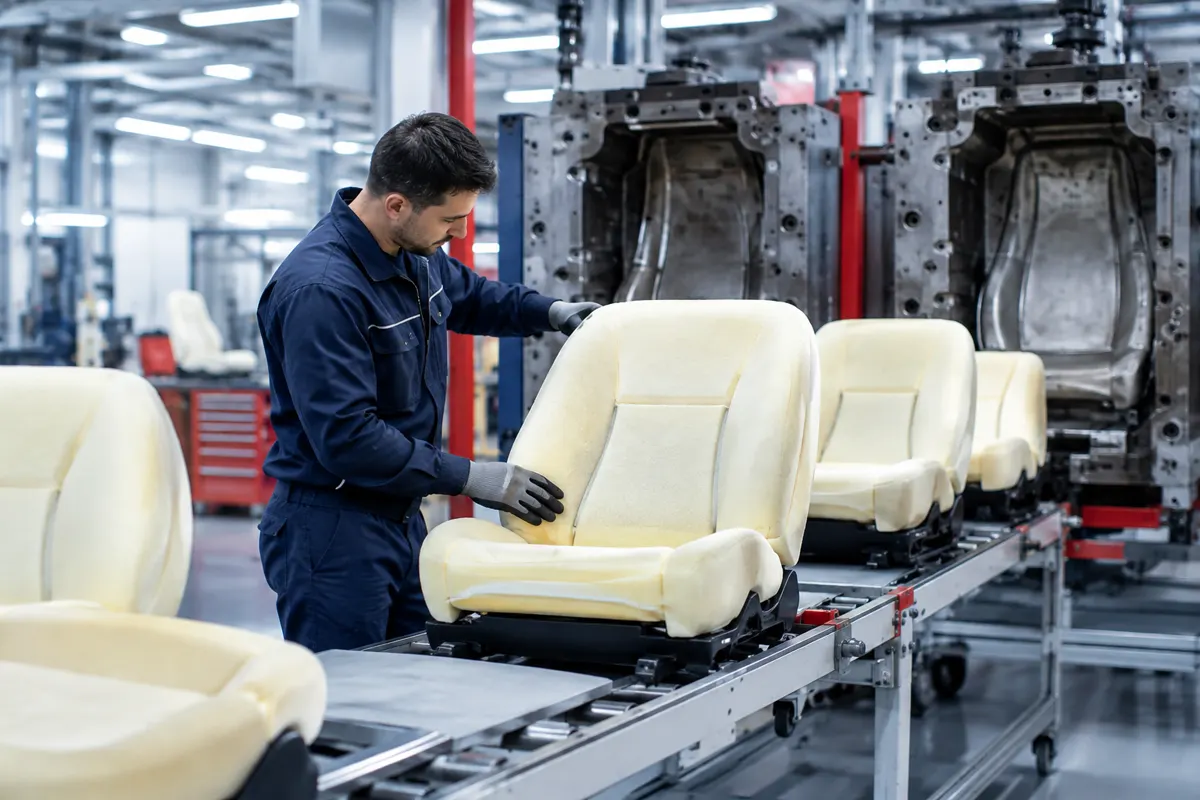
What is the difference between integral skin and moulded foam? Moulded foam produces a soft core to be covered with fabric; integral skin forms its own durable surface and can be used as it is.
Is a special machine needed for integral skin? A two-component high-pressure machine is enough; output and head are chosen according to part size.