High-pressure machines mix by impingement, low-pressure machines by a mechanical stirrer. We compare scrap, flushing, cycle time and investment.
Short answer: A high-pressure polyurethane machine mixes polyol and isocyanate in the mixing head by impinging them against each other through opposed injectors at pressures above 100 bar; a low-pressure machine mixes the components with a rotating mechanical stirrer. High pressure means a self-cleaning head that needs no solvent flushing, less scrap and shorter cycle times.
Mixing principle
In a high-pressure system the mixing energy comes from the kinetic energy of the fluids. The mixing chamber is very small; when the shot ends, a cleaning piston scrapes the chamber mechanically. A low-pressure system has a rotating stirrer in the mixing chamber, and the chamber must be cleaned with solvent or air between shots.
Comparison
- Scrap and cleaning: High pressure needs no flushing solvent and produces no flushing waste.
- Cycle time: The head is ready for the next shot immediately, which suits series production.
- Mixing quality: Homogeneous mixing even with fast-reacting systems.
- Investment: Low-pressure machines may be cheaper to buy, but solvent, scrap and labour costs raise the total cost.
Which one should I choose?
High pressure is the right choice for companies that pour many parts a day, run moulded production and need consistent quality. Low pressure can be considered for very small batches and workshops that change colours or systems frequently.
Frequently asked questions
Does a high-pressure machine use solvent? Not in normal operation; the piston cleans the head itself.
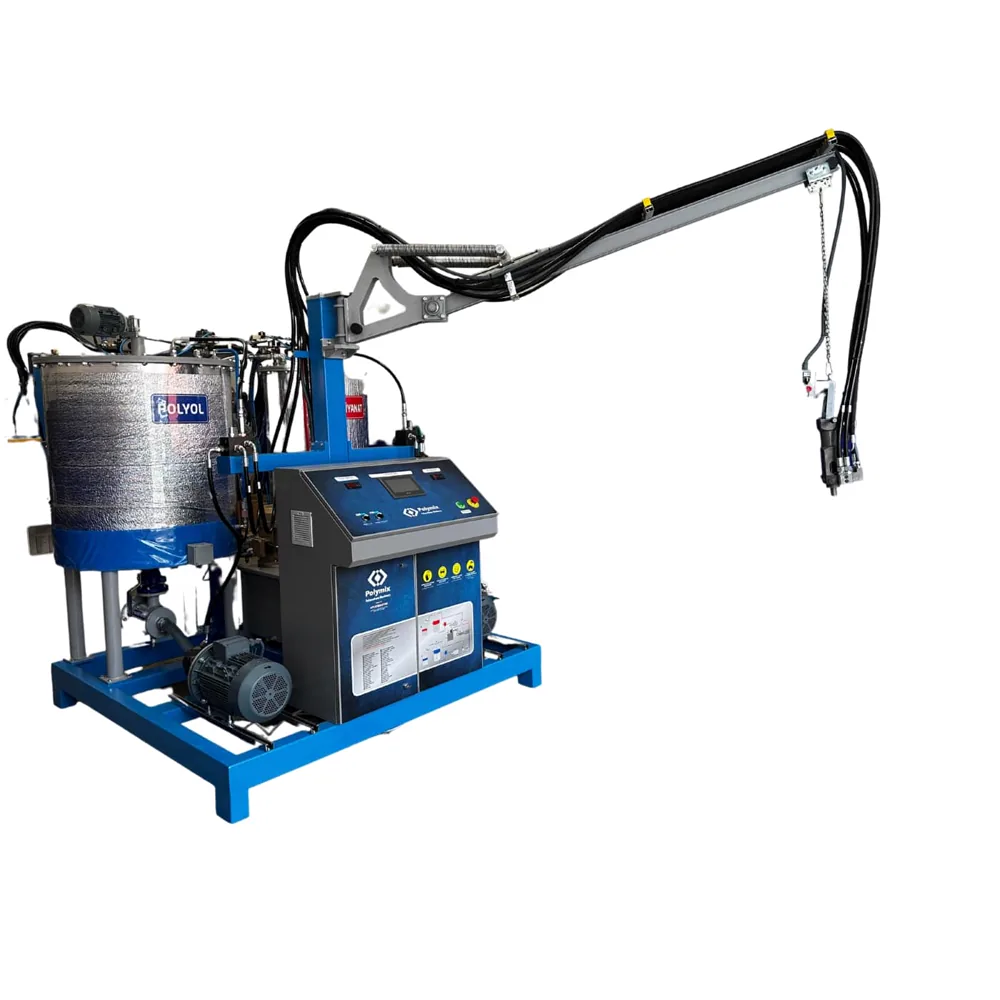
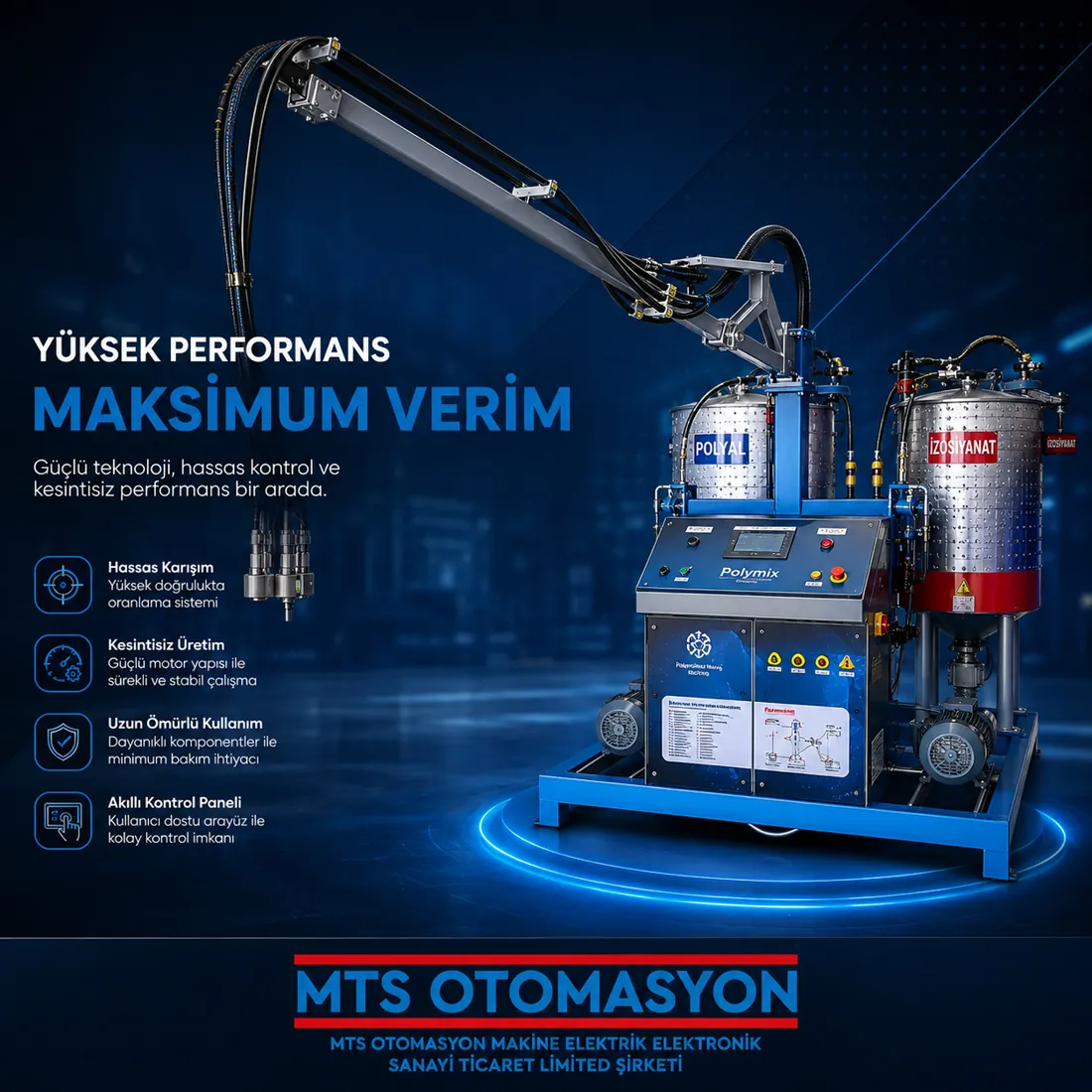
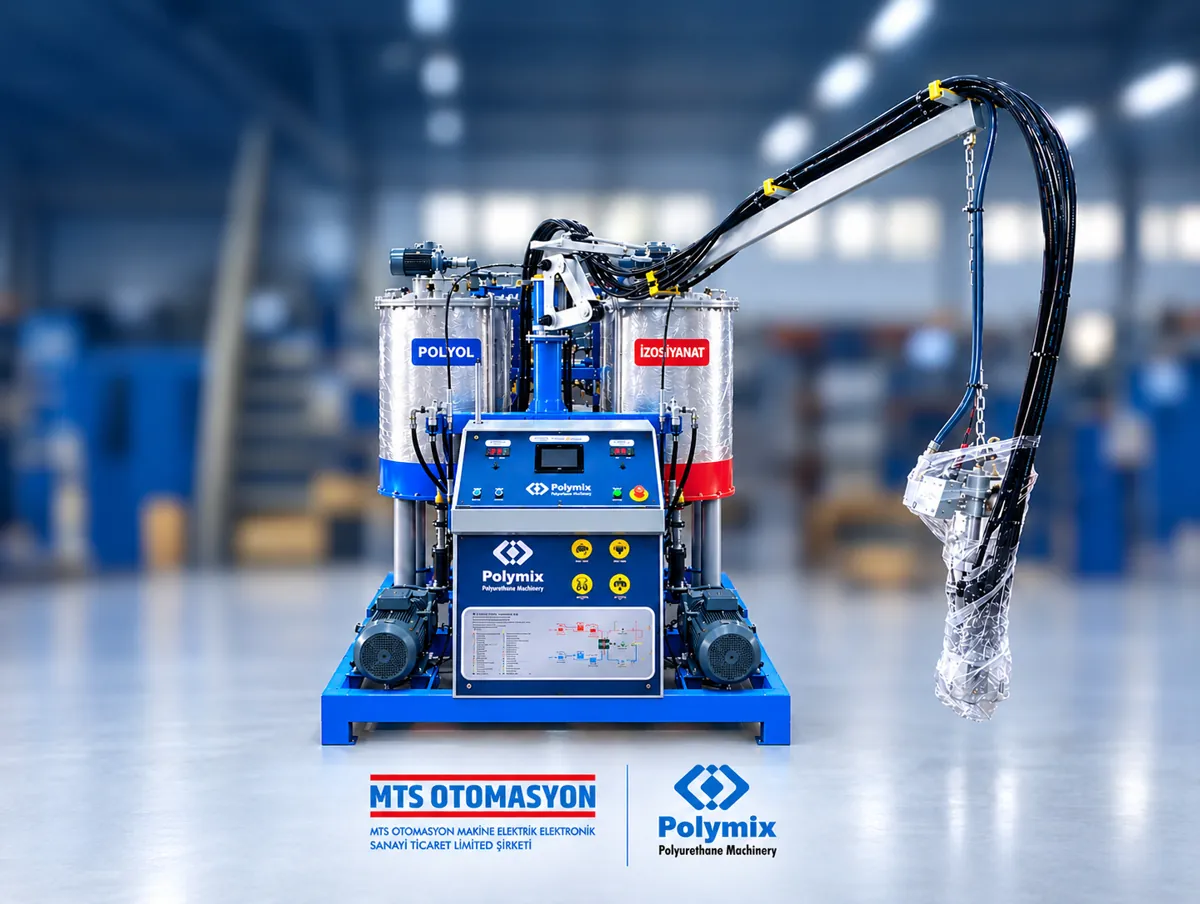
Is there a high-pressure machine made in Türkiye? Yes. Polymix high-pressure machines are built in Bursa, including the mixing head and the PLC software.